Last updated:
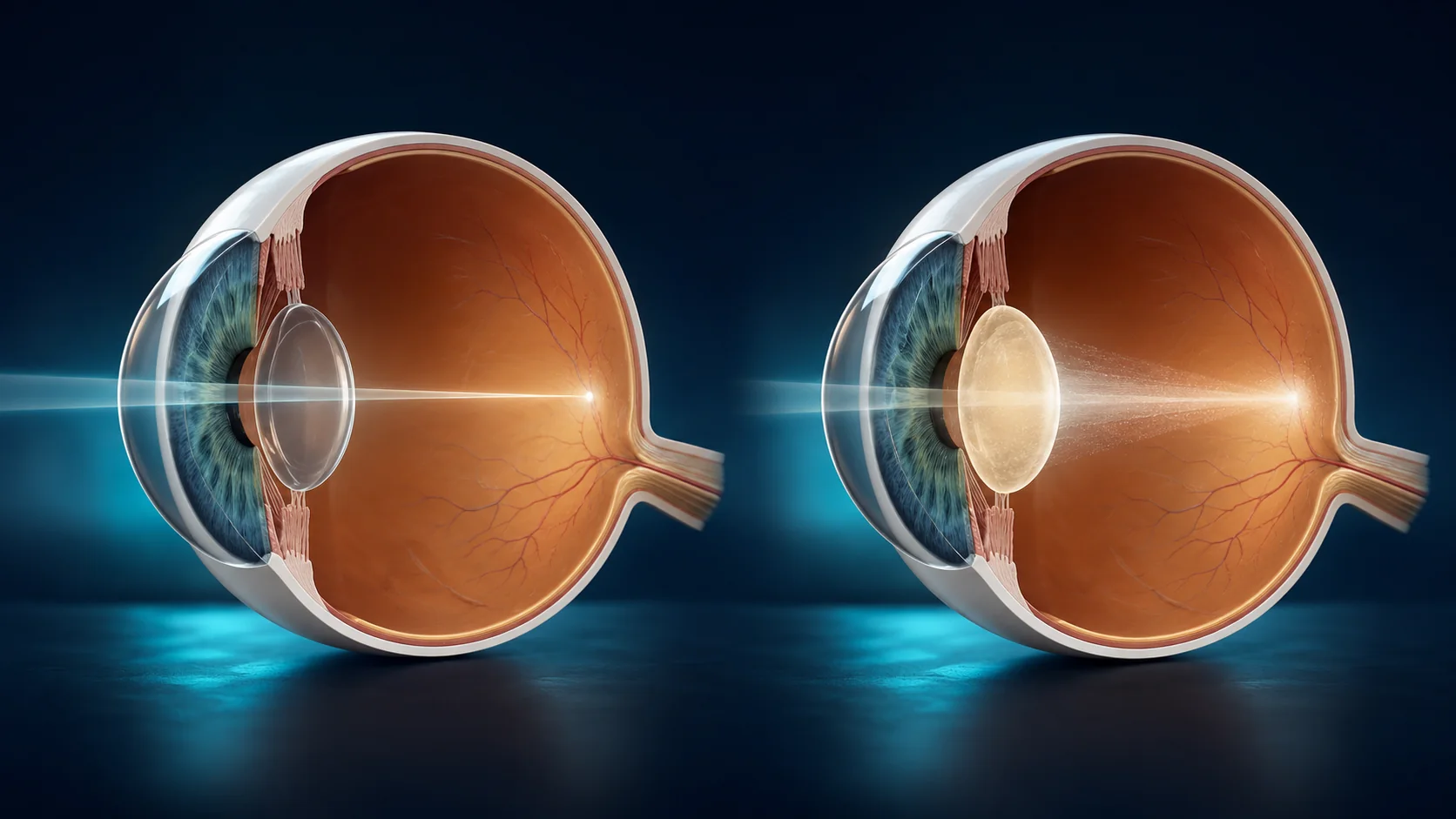
A cataract is clouding of the eye’s natural lens, which prevents light from reaching the retina clearly.
Cataracts commonly develop gradually with age, but they may also be associated with diabetes, eye injury, prolonged use of some medicines or other causes.
What symptoms can cataracts cause?
- Blurred or cloudy vision.
- Difficulty seeing at night.
- Glare from headlights or sunlight.
- Halos around lights.
- Colours appearing faded.
- Frequent changes in glasses prescription.
- Difficulty reading, driving or completing everyday activities.
These symptoms may also occur with other eye problems, so diagnosis requires a complete examination rather than symptoms alone.
How are cataracts diagnosed?
Assessment includes vision testing and examination of the natural lens and front of the eye. Eye pressure, the retina and the optic nerve may also be assessed according to the patient’s needs. This helps determine how much the cataract affects vision and whether another condition also requires care.
When may cataract surgery be needed?
Not every cataract needs immediate surgery. Timing depends on how much it affects vision and daily activities such as reading, driving or work. Effective treatment involves removing the cloudy lens and implanting an appropriate artificial intraocular lens after the necessary examination and measurements.
Post-operative follow-up is an important part of care, helping to monitor healing and work towards the best possible result.