Last updated:
An eye examination is more than measuring vision and prescribing glasses. A person may see well and still have an eye problem that benefits from early detection and follow-up.
Several eye conditions may start without obvious symptoms. A comprehensive examination helps assess different parts of the eye, not only the glasses prescription.
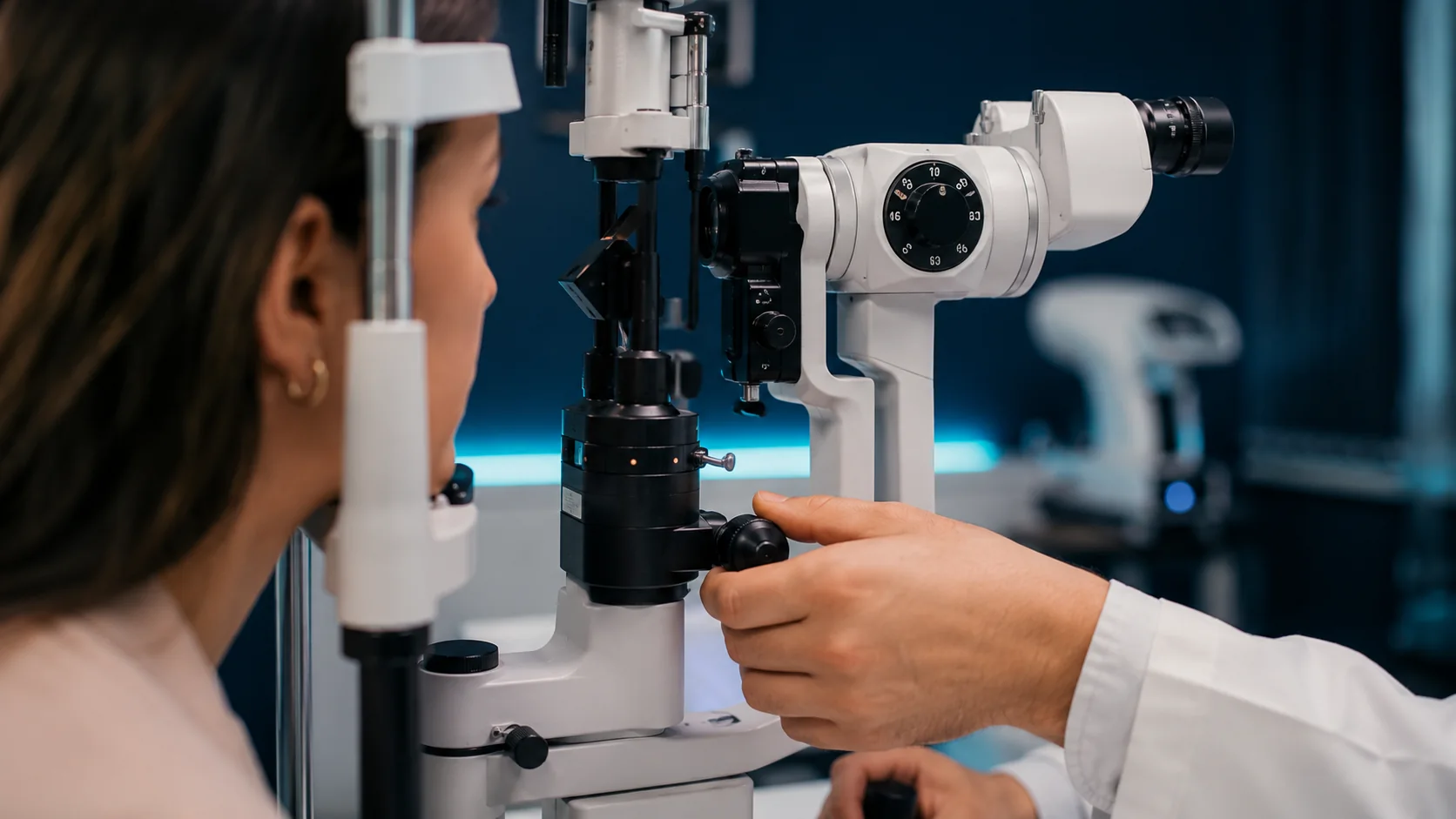
A comprehensive examination is the starting point
Tests are selected according to each patient and may include:
- Distance and near vision measurement.
- Examination of the front of the eye.
- Eye-pressure measurement.
- Examination of the natural lens.
- Retinal and optic-nerve assessment.
- Dilated fundus examination when needed.
The findings help determine whether glasses, treatment, additional tests or regular follow-up are appropriate.
Who may particularly benefit from an examination?
Assessment is especially important with reduced or changing vision, recurrent eyestrain or headache, persistent dryness or redness, blurred vision or difficulty seeing at night.
It is also important for people with diabetes or high blood pressure, a family history of glaucoma or eye disease, and children who sit very close to screens or cannot see the classroom board clearly.
After the examination, the condition, findings and care plan should be explained in simple, clear language so the patient understands the next steps.
Early and regular examination can help detect problems at an appropriate time and protect vision as effectively as possible.